
Beekeeping Resources for Central Maine
Welcome to our resource library—your trusted source for Maine-specific beekeeping and pollinator education. We're committed to sharing practical knowledge freely with our community.
Maine Beekeeping Calendar
Your month-by-month guide to beekeeping success in Central Maine. From spring hive inspections to winter preparation, we've tailored this calendar to the unique climate and nectar flows of the Northeast.
Spring (March - May)
- March: First inspections when temperatures reach 50°F; check food stores and remove dead bees
- April: Install packages or nucleus colonies; monitor for early spring pests; begin feeding if needed
- May: Add honey supers; monitor for swarming; ensure adequate brood patterns for population growth
Summer (June - August)
- June: Peak nectar flow from clover and wildflowers; monitor honey production; manage swarms
- July: Continue monitoring supers; treat for varroa mites if needed; ensure adequate water sources
- August: Begin honey harvest; reduce brood nest; prepare for fall feeding season
Fall (September - November)
- September: Finish honey harvest; begin feeding with sugar syrup for winter stores; treat for mites
- October: Complete fall feeding; reduce entrances for pest control; ensure 60+ pounds of honey for winter
- November: Install winter wraps or windbreaks; reduce hive ventilation; monitor for cluster formation
Winter (December - February)
- December: Minimal disturbance; allow cluster to form; monitor hive weight weekly
- January: Coldest month; ensure adequate ventilation; provide supplemental food if needed
- February: Monitor for spring buildup; check stores and cluster health; plan for spring season
Central Maine Climate Notes
Central Maine's last frost typically occurs around May 15th, and the first frost arrives around September 15th. Winter temperatures can drop below -20°F, requiring robust winter preparation. Nectar flows peak in June and July from native wildflowers, clover, and blueberry fields.
Native Plants for Pollinators
Create a thriving pollinator garden right here in Central Maine. Our curated guide helps you select native plants that bloom throughout the seasons, ensuring honeybees and other pollinators have food sources when they need them most.
Plan by Season
Spring Bloomers
Trillium, bloodroot, and wild ginger emerge early to fuel spring foraging.
Summer Favorites
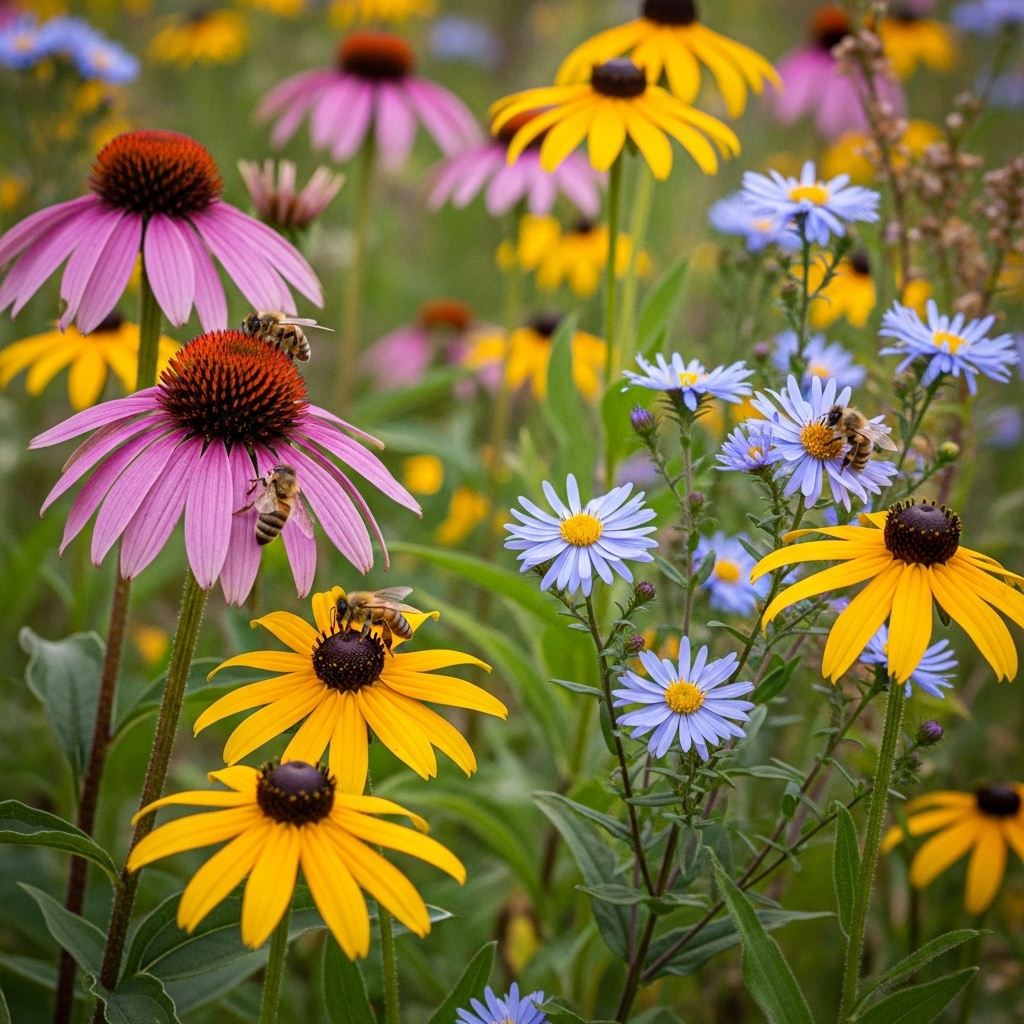
Black-eyed Susans, bee balm, and coneflowers provide abundant nectar.
Fall Abundance
Asters and goldenrod sustain pollinators preparing for winter.
Growing Success Tips
- ✓ Choose plants suited to Maine's USDA zones 5-6
- ✓ Avoid pesticides and herbicides completely
- ✓ Plant in clusters of the same species for easier foraging
- ✓ Provide full sun (6+ hours) for best bloom production
Local Sourcing
Find native plants at Central Maine native plant nurseries and local garden centers. Supporting local growers ensures plants adapted to our region.
Small Spaces
Container gardens and balcony plantings work beautifully. Even apartment dwellers can support pollinators with native perennials in pots.
Frequently Asked Questions
We're here to help you understand beekeeping, honeybee conservation, and how you can make a difference in Central Maine. Find answers to common questions below.
Honeybees are gentle creatures and not aggressive by nature. Stings are rare when you follow proper safety protocols and wear protective equipment. Most beekeepers find that bees are far less likely to sting than wasps or other insects. Our beginner workshops teach you all the safety practices needed to work confidently with your hives. With proper technique and respect for your bees, beekeeping is a safe and rewarding activity for people of all ages.
Initial startup costs typically range from $500–$1,500 for basic equipment including a hive, protective gear, and essential tools. You'll also need to purchase a package of bees or a nucleus colony, which costs $150–$250. While this is an investment, many beekeepers recover costs through honey sales and other hive products. Our workshops discuss budget-friendly options and ways to get started affordably. We also share resources for finding used equipment and connecting with local beekeeping groups that sometimes offer group discounts on supplies.
During the active season (spring through fall), expect to spend 1–2 hours per week per hive checking on your bees, monitoring health, and managing the colony. Winter requires less active management. The exact time varies based on your experience level, hive condition, and how hands-on you want to be. Many beekeepers find it's a relaxing, meditative activity that fits naturally into a busy schedule. Our workshops help you develop efficient routines so beekeeping becomes a manageable and enjoyable part of your weekly rhythm.
Most areas in Central Maine allow backyard beekeeping, but local zoning laws and homeowner association rules vary by town. We recommend checking with your local town office or planning department before getting started. Some areas require setbacks from property lines or neighbor notification. Our team can help you understand local regulations and find solutions that work for your situation. Many Central Maine communities are actively supporting beekeeping as part of local sustainability efforts.
Honeybees are managed, social insects that live in colonies and produce honey. Native bees—like bumblebees, carpenter bees, and mason bees—are solitary or semi-social species that are excellent pollinators but don't produce honey. Both are vital to Maine's ecosystem. Honeybees are important for agriculture and honey production, while native bees are often more efficient pollinators for native plants. The best approach is supporting both: keep honeybees if you're interested, and create habitat for native bees through native plantings. Our programs address both to create a comprehensive pollinator-friendly environment.
There are many ways to support honeybees without becoming a beekeeper! Plant native flowers and avoid pesticides in your garden. Support local beekeepers by buying local honey and bee products. Volunteer with conservation initiatives or help with community habitat projects. Donate to organizations working on pollinator protection. Educate others in your family and community about bee importance. Participate in citizen science projects that track pollinator populations. Advocate for pollinator-friendly policies in your town. Every action matters, and we welcome volunteers at all levels of involvement. Contact us to learn about current opportunities that match your interests and availability.
Honeybee populations face multiple challenges: habitat loss from development and monoculture agriculture, pesticide exposure (especially neonicotinoids), parasites like Varroa mites, diseases, and poor nutrition from limited diverse flowering plants. Maine's long winters also create unique challenges for colony survival. Climate change affects bloom timing and weather patterns. These aren't separate problems—they work together to stress bee colonies. The good news is that local action helps: native plantings restore habitat, reducing pesticides decreases toxin exposure, and community education builds awareness. While we can't solve everything individually, collective local action creates measurable impact for Central Maine's bee populations.
Colony collapse disorder (CCD) is a phenomenon where worker bees mysteriously abandon their hive, leaving the queen and young bees to die. The exact cause isn't fully understood, but research suggests it results from a combination of factors: pesticide exposure, poor nutrition, parasites, diseases, and stress. CCD was particularly devastating in the mid-2000s but has become less common as beekeepers have improved management practices. Today, beekeepers focus on preventing CCD through regular hive monitoring, Varroa mite management, diverse forage, and avoiding harmful pesticides. Understanding these causes helps us support bee health through better farming and land management practices across Central Maine.
Honeybees prefer native plants that bloom throughout the growing season, providing consistent nectar and pollen. In Central Maine, excellent choices include black-eyed Susan, bee balm, goldenrod, clover, asters, and native wildflowers. Avoid double-petaled ornamental flowers that lack nectar and pollen. Plant in clusters of the same species to make foraging more efficient. Our Native Plants for Pollinators guide provides a complete seasonal planting calendar for Maine, including where to source native plants locally. Even a small garden with 3–4 native plant varieties makes a significant difference for honeybees and other pollinators.
We welcome community members in many ways! Sign up for our educational workshops to learn beekeeping or pollinator conservation. Invite us to speak at your school, community group, or organization. Volunteer for habitat projects, events, or administrative support. Donate to support our conservation and education work. Partner with us on community initiatives if you represent a business, municipality, or organization. Join our mailing list for updates on programs and opportunities. Whatever your interest or skill level, there's a way for you to be involved. Contact us today to explore how we can work together to protect honeybees in Central Maine.
Still Have Questions?
We're always happy to help. Reach out to us directly with any questions about our programs, beekeeping, or how you can get involved in honeybee conservation.
Email Us Call UsLooking for more detailed information?
Explore Our Complete Resources Library